
Comparison of Mainland bird's nest (swiftlet house) and island bird's nest: origin, nutrition, cleanliness, safety, price
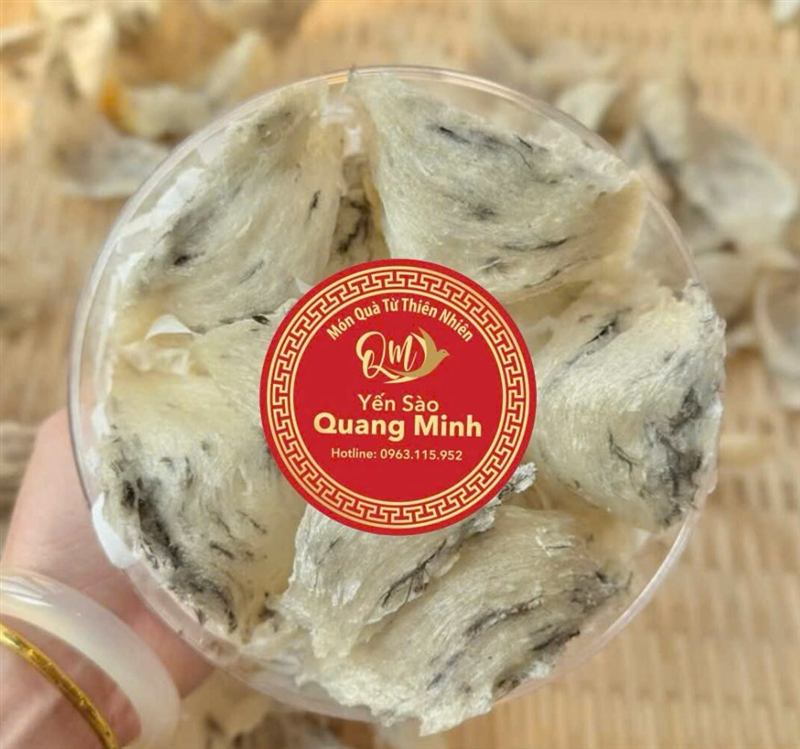
"Island bird's nest" is often promoted as more precious, more nutritious, and more expensive than "Mainland bird's nest (swiftlet house)." However, when asked specifically what the differences in composition are, how much they differ, and based on which research, most advertisements cannot provide an answer. This article takes the opposite approach: placing the two types of birds’ nests side by side on the same table, comparing each category (origin, nutritional content, cleanliness, safety, price, traceability), and explaining and noting right next to each line so you can evaluate for yourself.
A note on how to read: the numbers below are approximately the values commonly reported in published scientific literature on bird's nests (based on dry nests), not the specifications of any particular product or brand, and are not meant for brand comparison. Across studies, the data can vary significantly due to differences in bird species, region, harvest time, level of cleaning, and analysis methods. When purchasing, the most reliable reference is still the test report of the specific batch.
Quick summary: 6 key points to remember
- The two types mainly differ in where the birds build their nests (caves, natural cliffs, or human-made swiftlets houses), which in turn affects harvesting, impurities, supply, and price.
- The main components of the two types are the same: mainly protein (in glycoprotein form) and carbohydrates bound to protein; very low fat; minerals and vitamins are present in small amounts.
- There is no scientific evidence showing that island bird's nest is superior to mainland bird's nest in nutrition. Some studies note minor differences (e.g., mineral/ash content), but the results are inconsistent and much smaller than the variation between batches.
- A serving of bird’s nest soup only uses a few grams of dried nest, so the actual nutritional contribution is quite modest compared to a daily meal, whether it is island bird's nest or mainland bird's nest.
- Safety and cleanliness depend on the processing, not on the name "cave" or "domestic": nitrites, heavy metals, mold, and impurities all need to be checked batch by batch.
- Price differences are largely due to supply, harvesting costs, processing, and brand, not evidence that the nutritional components differ correspondingly.
1. Two concepts and their fundamental differences
Island bird's nest is a nest made by swiftlets in caves, cliffs, or natural islands. Mainland bird's nest (swiftlet house) is a nest made by swiftlets in bird houses built and managed by humans; the birds can still freely come and go, without being caged. Both are nests made from the saliva of swiftlets; see more about how bird's nests are formed and a short comparison article distinguishing island bird's nest and mainland bird's nest.
Table 1. Differences in origin, harvesting, and conditions
| Item | Mainland bird's nest (swiftlet house) | Island bird's nest | Explanation – notes |
|---|---|---|---|
| Nesting place | House nests built by humans, with controlled temperature, humidity, and lighting | Caves, cliffs, natural islands | This is the fundamental difference. All other differences (cleanliness, price, supply) originate from here. |
| Human intervention in the environment | Yes: design, ventilation, equipment, sanitation | Almost none (just harvesting) | Intervention in swiftlet houses helps better manage sanitation, but it also means quality depends on the manager; see what a swiftlet house is. |
| Harvesting | In constructed buildings, it can follow a plan and be organized by floor/section | In caves, it is often difficult, depending on terrain, weather, and season; it can be dangerous for harvesters | The season and harvesting method affect thickness, cleanliness, and whether birds have time to incubate eggs; see swiftlet nest harvesting season. |
| Legal framework | Swiftlet houses must comply with local planning, environmental, veterinary, and food safety regulations | Harvesting island bird's nest is strictly regulated; illegal hunting is a violation. | Only purchase from legal sources; see legal conditions for bird's nest farming and ban on hunting swiftlets. |
| Typical nest shape | Usually thinner, more uniform, cleaner when harvested | Usually thicker, with more feathers and natural impurities | These are just general trends, not conclusive. Color and thickness vary according to environment and processing; see what is blood nest. |
| Traceability | Easily traceable to each swiftlet house if the facility keeps records | Requires area records, exploitation unit, and legal documents | Lack of documentation is a risk for both types; a label stating "island bird's nest" without paperwork is not sufficient to trust. |
2. Comparison of nutritional components by category
Dried bird's nest mainly consists of protein (mostly glycoproteins, that is, proteins bound to sugar chains), followed by carbohydrates (including sialic acid and sugars such as N-acetylglucosamine, galactose…), a small amount of water, minerals (ash), and very little fat. Studies analyzing bird's nests (for example, publications by Marcone 2005, Ma & Liu 2012, Quek et al. 2018 – see the reference section at the end of the article) generally show this compositional structure.
The column "Typically reported range" indicates the range of numbers appearing in the literature, based on dried bird's nests. The two columns "Mainland bird's nest (swiftlet house)" and "Island bird's nest" state any comparison trends if available, or clearly note that there is no stable difference.
Table 2. Nutritional composition (calculated on dry nests)
| Component | Commonly reported range | Mainland bird's nest (swiftlet house) | Island bird's nest | Explanation – notes |
|---|---|---|---|---|
| Moisture (water) | About 10–20% by weight | No difference due to origin | No difference due to origin | Moisture depends on drying and storage, not on 'island' or 'house'. The more water there is, for the same weight stated on the box, the less real bird's nest there is. Compare prices based on dried bird's nest, considering the storage of raw and refined bird's nest. |
| Total protein | About 40–65%, most publications around 50–60% | No stable difference | No stable difference | It is the largest component. The protein content is usually calculated from the nitrogen content multiplied by a factor, so samples that still have feathers, impurities, or are mixed with other substances will give different results. There is no scientific evidence showing which type has more protein. |
| Total carbohydrate | About 20–35% | Equivalent | Equivalent | Most of it is sugar within the glycoprotein structure, not edible sugar like rock sugar. The rock sugar you add when steaming is another source of sugar and is usually more. |
| Sialic acid | From a few percent to over 10% of dry weight, depending on the sample and method. | No consistent difference reported. | No consistent difference reported. | Often mentioned in advertisements. Sialic acid is also present in many foods and in the human body; the numbers vary widely between studies, so no single number should be used to "assess the type." The presence of sialic acid does not imply a specific health benefit. |
| Fat | Very low, usually below about 1–2% | Very low | Very low | Edible birds' nests contain almost no fat; the calories mainly come from protein and carbohydrates. |
| Ash (total minerals) | About 2–10% | Usually lower in some samples | Usually higher in some samples | Some studies note that cave nests have higher ash, which may be due to natural minerals and adhered impurities (dust, cave residues), but not all studies observe this. High ash does not mean "more beneficial": it also includes unwanted minerals and impurities. |
| Calcium, sodium, potassium, magnesium, phosphorus | Present in small amounts, usually measured in mg per 100 g | Small differences, inconsistent | Small differences, inconsistent | With a few grams of dried bird's nest per serving, the total minerals absorbed from the nest are very small compared to daily requirements; see Table 4. Bird's nest should not be considered a major source of minerals. |
| Iron, zinc, and other trace minerals | Trace to very small amounts | Small differences, inconsistent | Small differences, inconsistent | May vary depending on the nesting environment. The amount is very small, so the actual nutritional significance is limited; at the same time, this is a group that needs to be checked alongside heavy metals (Table 3). |
| Amino acids | About 17–18 amino acids identified; aspartic acid, glutamic acid, proline, threonine, serine, valine… often account for a prominent proportion | Similar profile | Similar profile | They are components that make up proteins. Some amino acids are easily destroyed during sample hydrolysis, so reports from different laboratories may differ. This does not change the fact that bird's nest protein is only a regular protein source, used in small amounts. |
| Vitamins | Very little | Insignificant | Insignificant | Bird's nest is not a significant source of vitamins. Advertisements claiming it is "rich in vitamins" should be considered cautiously. |
| Energy (calories) | Estimated around 300–370 kcal/100 g of dried bird's nest | Equivalent | Equivalent | Calculated from protein and carbohydrate content (about 4 kcal/g each). Since only a few grams of dried nest are used, the energy from the nest in one serving is low; significant energy usually comes from sugar and additives. See does bird's nest have high calories. |
How to read this table? The rows that say "no consistent difference" mean that the published studies give mixed results (some studies found this type to be higher, some found the opposite or no difference), and any difference is usually smaller than the variation between batches from the same source. Therefore, it is more reliable to look at the test results of the batch you buy rather than relying on the name "island" or "house." You can see the overview of components in the article nutritional components of bird’s nest: what is known and unknown.
3. Comparison of cleanliness, impurities, and food safety
This is the part where the choice between two types has more practical significance than nutrition, but the answer is still not "which type is always safer." The risk lies in the process and the control of each batch.
Table 3. Cleanliness and safety
| Item | Mainland bird's nest (swiftlet house) | Island bird's nest | Explanation – notes |
|---|---|---|---|
| Feathers and physical impurities | Usually less but still present; level of cleanliness of the swiftlet house | Usually more (feathers, dust, cave residue, stone fragments) | Need to pick clean before processing; see how to pick raw bird's nest at home. The more impurities in the nest, the greater the loss during cleaning. |
| Nitrite and nitrate | May be present, depending on the swiftlet house environment and post-harvest handling | May be present, related to bird droppings and bacteria in the cave | Nitrite is a safety indicator regulated with limits by many markets. The presence of nitrite is related to environmental conditions, processing, and storage, not the nature of "mainland bird's nest" or "island bird's nest". It is necessary to check the test report. |
| Heavy metals, arsenic | May be present in trace amounts, depending on the environment and water/material sources around the swiftlet house | May be present in trace amounts, depending on rocks, soil, and water sources in the cave | Cannot be guessed by type. Only testing can tell; prioritize batches with lead, cadmium, mercury, arsenic results within current regulatory limits. |
| Mold and microorganisms | Depending on drying and storage | Depending on drying and storage | This is the risk for both types when damp; see how to recognize spoiled bird's nest and storage during humid seasons. |
| Bleaching, coloring, dyeing | Risks if fraudulently processed | Risks if fraudulently processed (especially with red/orange nests advertised as "precious") | Nests treated with chemicals or dyed are unsafe; see distinguishing real and fake bird's nests and the limits of home testing. |
| Testing records | Need to follow by batch | Need to follow by batch | Same requirements. See food safety with bird's nests and how to read the report in the article how to read bird's nest test results. |
4. How much substance does a real serving of stewed bird's nest actually contain?
This is the practical perspective that the ingredient table above does not show. When cooked, bird's nest absorbs water and expands many times, so a bowl may look full but the amount of dry bird's nest inside is only a few grams. Below is an illustrative calculation based on the ranges in Table 2 (protein 50–60%, energy 330–360 kcal/100 g dry, ash 2–8%):
Table 4. Estimated levels of dry bird's nest in a serving (illustrative)
| Amount of dry bird's nest per serving | Estimated protein | Estimated energy from bird's nest | Maximum total minerals (ash) | Explanation – notes |
|---|---|---|---|---|
| 3 g | About 1.5–1.8 g | About 10–11 kcal | About 0.06–0.24 g (60–240 mg) for all minerals combined | Small, commonly used amount. Nutritional contribution is very modest. |
| 5 g | About 2.5–3.0 g | About 17–18 kcal | About 0.1–0.4 g (100–400 mg) total | Commonly used amount for one bowl. Still a small amount. |
| 10 g | About 5.0–6.0 g | About 33–36 kcal | About 0.2–0.8 g (200–800 mg) total | The usage level is quite high. The protein amount is roughly equivalent to one medium chicken egg (about 6 g of protein). |
For comparison: the daily protein requirement of a healthy adult is usually stated around 0.8 g/kg of body weight (about several dozen grams per day). Thus, with 5 g of dried bird's nest, the protein from the nest only accounts for a small proportion of the daily requirement; and the "total minerals" in column 4 are all minerals combined, among which each type (calcium, iron, zinc…) is much smaller. This is why the article emphasizes that bird's nest should not replace a main meal, and the difference of a few percent in minerals between mainland bird's nest and island bird's nest (if any) does not create a meaningful nutritional difference in a serving. The rock sugar and accompanying ingredients usually contribute more energy than the bird's nest itself.
5. Price, supply, and traceability
Table 5. Commercial aspects
| Item | Mainland bird's nest (swiftlet house) | Island bird's nest | Explanation – notes |
|---|---|---|---|
| Supply | Expanded according to the scale and number of bird's nest houses. | Limitations, dependence on natural conditions and exploitation regulations | Limited supply is a key reason why island bird's nest is often priced higher. |
| Harvesting and processing costs | Easier harvesting; moderate processing | Difficult harvesting, more impurities during processing, higher losses | Losses during cleaning increase the price per gram of clean nests. |
| Market price | Usually lower | Usually higher | Actual differences vary greatly by brand, cleanliness, specifications, and sales channel; see why bird's nest prices differ. Higher price does not automatically prove higher nutrition. |
| Risk of mislabeling origin | Can be mixed, adulterated, or substituted | It may be labeled 'island bird's nest' for mainland bird's nest to sell at a high price | Buyers have difficulty distinguishing by sight. Request origin documents and certificates, and see how island bird's nest and mainland bird's nest differ. |
| Comparing prices correctly | Price per gram of clean dried nest | Price per gram of clean dried nest | Don't compare by box price; compare by specification, cleanliness, and the weight of dried bird's nest. See how to read the bird's nest price sheet. |
6. Common advertisement claims: how true are they?
Table 6. Quick verification of assertions
| Common claims | Evidence | Comments |
|---|---|---|
| "Island bird's nest has much more[something]than mainland bird's nest" | There is no scientific evidence. | Comparative composition studies show inconsistent results and any differences, if present, are small. There is no basis to say "much more." |
| "Island bird's nest has more minerals" | Partially: some studies report higher ash/minerals in cave nests | The absolute mineral content in a serving is very small (Table 4); the "higher" part may include impurities. No significant practical nutritional value. |
| "Mainland bird's nest contains more nitrite/chemicals" | Not true as a rule | Nitrites are related to environmental conditions, processing, and storage; they can be found in both types. Each batch's test report should be checked. |
| "Island bird's nest is completely natural, so it is cleaner" | Not absolutely correct | Caves have bird droppings, dust, microorganisms; island bird's nest usually needs more cleaning. "Natural" does not mean "clean". |
| "Mainland bird's nest is fake bird's nest" | Wrong | Mainland bird's nest is the real nest of swiftlets, legal and common when the birdhouse follows regulations. |
| "The darker the color, the more precious" | There is no scientific evidence. | Color is not a measure of nutritional value and can be influenced; see what is blood bird's nest. |
| "Eating island bird's nest will cure/prevent disease" | Not allowed and has no basis | Edible bird's nest is a food, not medicine. Advertising it as medicine is a warning sign to avoid. |
7. So which type should you choose?
There is no "best for everyone" type. Choose according to your purpose, budget, and the seller's transparency level:
| Needs | Suggestions for consideration | Reason |
|---|---|---|
| Regular use in the family | Mainland bird's nest has clear documentation and testing, and proper standards | More affordable for long-term use; quality verified by records. See the tasting plan for edible bird's nest if you want regular use while saving. |
| Gift | Choose according to budget, recipient, and packaging neatness; island bird's nest is an option if it has documentation and you want a gift that is "rare" | The value of the gift includes packaging, brand, and emotion. But don’t pay extra just because of the word "island." |
| Restaurants, spas | Mainland bird's nest or broken nests, stable source, tested by batch | Need a stable supply and controllable cost; consider buying bird's nest wholesale. |
| People sensitive to impurities or dislike picking feathers | Refined bird's nest that has been cleaned (house or island) from a source with a transparent process | Reduces cleaning work; see raw bird's nest vs refined bird's nest. |
8. How to verify origin and quality when buying
- Ask clearly about the source: mainland bird's nest or island bird's nest, in which area, which unit harvested/processed it, and the harvesting time.
- Requirement for basic documents and legal certificates (especially for island bird's nest): extraction documents, transportation documents, purchase invoices.
- Request batch test certificates, including nitrite, heavy metals, and microbiological indicators; the batch code on the certificate must match the code on the box. See how to read bird's nest test results.
- Ask about the weight of dried bird's nest and the loss during cleaning, to calculate the price per gram of clean bird's nest.
- Check actual images/videos of the bird's nest house or legally operating units, or request a visit if possible; when visiting a bird's nest house, know what questions to ask.
- Be cautious with sellers who rely only on shape, color, or "testing with fire/chemicals" to prove the type of nest; at-home tests have many limitations.
- Keep invoices and return policies complete; see what return terms should be included.
Limits of this comparison article
- The figures are approximate and commonly reported in literature about bird's nests on the market, not the measurement results of a specific brand or batch.
- Many studies have small sample sizes, involve different bird species, regions, and methods, making it difficult to combine them into a "standard" number.
- Nutritional content does not equate to health effects. Human evidence for specific benefits is still limited or inconsistent.
- Regulations on nitrites, heavy metals, and labeling may change depending on the time and market; please check current regulations when needed.
Documents for further reference
Here are some scientific publications that are frequently cited when discussing the composition and properties of bird's nests. You should look for the original papers to read the methods and detailed data, as the results among studies are not completely consistent:
- Marcone M.F. (2005). Characterization of the edible bird's nest the "Caviar of the East." Food Research International, 38(10), 1125–1134.
- Ma F., Liu D. (2012). Sketch of the edible bird's nest and its important bioactivities. Food Research International, 48(2), 559–567.
- Quek M.C. et al. (2018). Characterization of edible bird's nest of different production, species and geographical origins using nutritional composition, physicochemical properties and antioxidant activities. Food Research International, 109, 35–43.
Frequently Asked Questions
Which type, Island bird's nest or mainland bird's nest, has more nutrients?
There is no scientific evidence showing which type is more nutritious. The main components (protein, carbohydrate) are similar; any differences (e.g., mineral/ash) are usually small, inconsistent across studies, and insufficient to create a significant difference in a serving of bird's nest soup.
Why is island bird's nest more expensive if the nutrition is not much different?
The price reflects limited supply, harvesting costs and risks, losses during cleaning, brand, and the perception of 'rarity.' The price does not automatically reflect nutritional content.
Is Mainland bird's nest safe?
Mainland bird's nest is safe when the swiftlet house is legal, well sanitized, harvested and processed correctly, and the batch passes safety standards tests. This also applies to island bird's nest.
How to know if the box I bought is island bird's nest or mainland bird's nest?
It is very hard to tell with the naked eye. A more reliable way is through origin documents, legal certificates, and batch test reports. If the seller cannot provide them, consider not paying extra for the name "island bird's nest."
Should I choose based on type or seller?
You should prioritize transparent sellers (records, inspections, returns, invoices) first, then the type of bird's nest. See more at buying bird's nest online safely.
Should people with allergies or underlying conditions choose a specific type?
No type is "safer" for people with allergies; both are proteins from bird saliva. Consult a doctor before use if you have a history of food allergies or are undergoing treatment; see information for pregnant women and older adults in related articles.
Related articles: guide to using bird's nest · preserving bird's nest · distinguishing real and fake bird's nest · safely buying bird's nest online.
Note: Bird's nest is a food, not medicine, and does not have the effect of replacing medicine for treating diseases. The information in this article is for reference only and does not replace advice from doctors or nutrition experts. People with a history of food allergies, those undergoing treatment, or those who need to control blood sugar should consult a doctor before use. Individual responses may vary.